













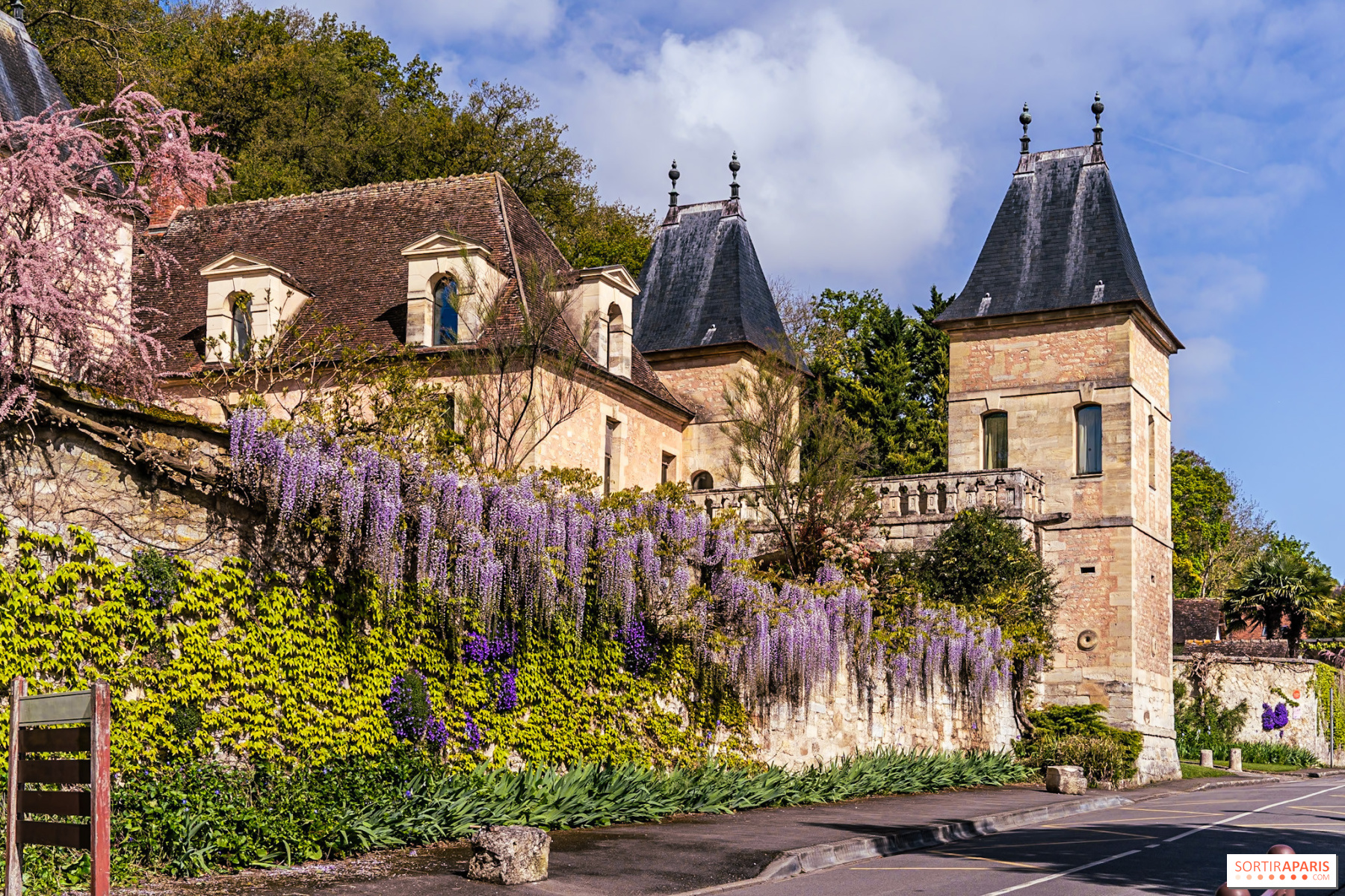
Published by My de Sortiraparis · Photos by My de Sortiraparis · Updated on April 9, 2026 at 11:18 a.m.Nestled on the banks of the Seine in Médan, Yvelines, the Château de Médan is a former hunting lodge listed as a Historic Monument, a site whose history weaves together poetry, painting and royal intrigues. The château is open to visitors once a month, for group bookings, or on special occasions such as Open Gardens or Heritage Days—we’ve got the full details.The Château de Médan is one of those places you stumble upon by chance and never forget. Perched on the hillside along the banks of the Seine, in the Yvelines (78), this former pavillon de chasse has logged more than ten centuries of history, drawing illustrious visitors — Renaissance poets, French kings, Nobel Prize in Literature laureates, and Impressionist painters. Listed on the Supplementary Inventory of Historic Monuments since 1926 and tagged Maison des Illustres by the Ministry of Culture since 2013, it opens its doors for guided tours conducted by its owners themselves.A Thousand-Year-Old Castle: From Fortress to Royal Hunting LodgeThe site’s history stretches back to the 9th century, making it one of the oldest landmarks in the region. The original structure serves as the foundation for a hunting pavilion at the end of the 15th century, after which the building is converted in the 16th century into a château for the Perdriel family. It is Pernette Perdriel’s marriage to Jean Brinon that ushers the estate into a new era: their son, Jean II Brinon, a generous patron and man of letters, turns it into a gathering place for the era’s brightest minds. Later, Jean Bourdin, chamberlain to Henri IV, adds the farm around 1635, while between 1750 and 1777 the Gilbert de Voisins family erects a long wing facing the valley, later rebuilt in 1873 by Baron de Dalmas. An accretion of architectural layers that remains perceptible to visitors today. Ronsard and the poets of La Pléiade: when Médan was the court of lettersIt is in the 15th century that the lands of Médan pass into the Brinon family. Jean II Brinon, educated in the belles lettres, hosts for his friends the fêtes and revelries of the Pléiade poets. Médan and Villennes thus become the setting for hunting parties where Ronsard, Jodelle, Dorat, du Bellay and many others gather. The hunt is often just a pretext: poetry flows freely in these evenings that mingle wit with the countryside. Ronsard composes several pieces at Médan in tribute to his host, including the poem Le Hous, à Jehan Brinon, written on site in 267 lines. Brinon’s generosity eventually bankrupts him, and he dies at just 36 in 1555, his poet friends paying him homage with a literary tomb preserved at the bibliothèque Mazarine in Paris. The château also keeps alive memories of King Henri IV and his loves with Gabrielle d’Estrées, who used to stay there and hunt in this